Dehradun: The Eternal Valley Between the Himalayas and the Shivaliks
1. The Name and First Impression
Dehradun (देहरादून) literally means “the camp (dūn) of the temple (dehra).” Legend says Guru Ram Rai, eldest son of the seventh Sikh Guru, Har Rai, pitched his camp here in 1676 after being disowned for displaying miracles before Emperor Aurangzeb. He built a dera (camp) that grew into a temple, and the valley around it became Dehra-Dūn. The British anglicised it to “Dehra Doon” and finally “Dehradun.”
To the first-time visitor arriving from the plains, the city announces itself suddenly. One moment you are on the hot, dusty Gangetic plain; the next, the road dips, the air cools by 8–10 °C, and the Shivalik hills rise like a green wall. Behind them, on clear days, snow peaks of the Garhwal Himalaya float in the horizon. The smell changes too: from diesel and dust to pine resin, wet earth after the first monsoon shower, and the faint sweetness of litchi orchards in May.
2. Geography and Setting
Dehradun lies in the Doon Valley, a 75 km long and 15–25 km wide tectonic trough between the Lesser Himalaya (Shivalik range) in the south and the Higher Himalaya in the north. Two seasonal rivers frame the city: the Ganga-bound Song river in the west and the Yamuna-bound Asan in the east. Countless smaller hill torrents (locally called raos) — Rispana, Bindal, Suswa, Tons — rush down from Mussoorie and Chakrata, carving the valley into gentle ridges and ravines.
Coordinates: 30°19′N 78°02′E
Altitude: 640 m (city centre) to 1,000 m (Mussoorie ridge)
Area (district): 3,088 km²
Population (2023 estimate): City proper ~8.5 lakh, metropolitan region ~11.5 lakh
The valley floor is extraordinarily fertile alluvium washed down for millennia. Litchi, mango, basmati rice, tea gardens, and now floriculture greenhouses cover the landscape. The surrounding hills are sal (Shorea robusta) forest, classic moist deciduous Shivalik ecosystem.
3. Seasons – A Year in Dehradun
Dehradun has five distinct seasons, not the usual three or four:
– Winter (mid-Nov to Feb): Crisp mornings (2–6 °C), occasional western disturbances bringing light rain and snow on the Mussoorie ridge. Woollens and wood-smoke bonfires.
– Spring (Mar–mid-Apr): Rhododendrons and semal blossom on the hills; the famous Dehradun basmati harvest.
– Pre-monsoon summer (mid-Apr to June): Litchi season; temperatures climb to 40–42 °C in the shade but nights remain pleasant.
– Monsoon (July–mid-Sept): Heavy showers (average 2,000–2,200 mm); raos become raging brown torrents; landslides on Mussoorie road.
– Autumn (Oct–mid-Nov): Crystal-clear Himalayan views, perfect 20–25 °C days, festivals, and the scent of burning pine needles.
4. Historical Layers
– Pre-historic: Ash mound culture sites near Sahastradhara.
– Mahabharata & Pauranic period: Identified by some scholars with the kingdom of Srughna or the hermitage of Drona (hence “Dronagiri” nearby).
– Katyuri and Garhwal kings (7th–15th century): Ruled from Joshimath and Srinagar but kept summer camps in the valley.
– Gorkha occupation (1803–1815): Amar Singh Thapa built a fort at Mussoorie ridge.
– British period (1816–1947): After Anglo-Gorkha war, the valley was ceded to British East India Company. Dehradun became the centre of land revenue experiments (the famous “Doon Valley Settlement” by Captain Birch). The British planted the first tea bushes, laid out cantonments, and turned the valley into a retirement paradise. Institutions born in this era:
– Forest Research Institute (1906)
– Indian Military Academy (1932)
– Doon School (1935)
– Wadia Institute of Himalayan Geology (1968, but roots in 19th-century surveys)
Post-independence, Dehradun became the capital of Uttar Pradesh’s Garhwal division, and on 9 November 2000, the capital of the newly created state of Uttarakhand.
5. The Modern City – Layout and Neighbourhoods
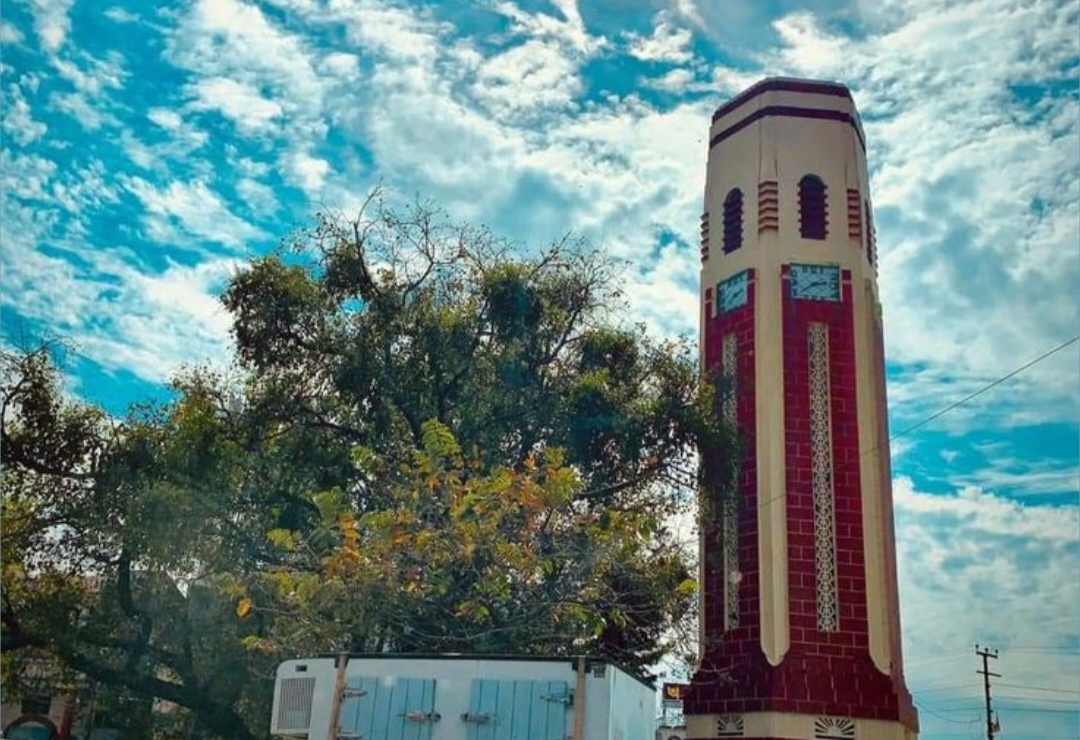
Dehradun has grown radially around the historic Clock Tower (Ghanta Ghar).
– Paltan Bazaar – Clock Tower – Rajpur Road axis: the commercial heart.
– Chakrata Road: Old cantonment, Survey of India, IMA.
– Rajpur Road: Upscale malls, cafés, old colonial bungalows now converted into hotels.
– Mussoorie Road (old “Landour Road”): Leads to the hill station in 35 hairpin bends.
– Sahastradhara Road: Sulphur springs and new residential colonies.
– ISBT – Clement Town: New bus stand and Tibetan settlement.
– Raipur – Doiwala: Industrial and agricultural belt toward Rishikesh.
– Suburbs: Premnagar, Selakui, Selaqui (pharma hub), Pondha, Vikasnagar.
The city still retains large green lungs: FRI campus (2,000 acres of colonial buildings and arboretum), IMA, ONGC campus, and numerous defence establishments.
6. Institutions – The “School Capital of India”
Dehradun’s reputation as an education hub began with British boarding schools and continues today.
Iconic schools:
– The Doon School (1935)
– Welham Girls’ School (1937)
– Welham Boys’ School
– St. Joseph’s Academy
– Conventus School
– Col Brown Cambridge School
– Rashtriya Indian Military College (RIMC, 1922)
– Indian Military Academy (IMA)
Higher education:
– Forest Research Institute (deemed university)
– Wildlife Institute of India
– Wadia Institute of Himalayan Geology
– Indian Institute of Petroleum
– Indian Institute of Remote Sensing (ISRO)
– University of Petroleum and Energy Studies (UPES)
– Graphic Era University
– Doon University
– IMS Unison University
The presence of these institutions gives the city a cosmopolitan student population and a culture of debate, theatre, and literature festivals.
7. Economy – From Basmati to Pharma
Traditional: Dehradun long-grain basmati rice (GI tag 2014), litchi, tea, mango.
Modern drivers:
– Pharmaceutical manufacturing (Selakui-Selaqui belt – Elder, Torrent, Mankind, etc.)
– IT/ITES parks (Sahastradhara IT Park)
– Tourism (gateway to Mussoorie, Dhanaulti, Chakrata, Rishikesh-Haridwar)
– Defence establishments and paramilitary forces headquarters (ITBP, IMA)
– Central government offices (Survey of India, ONGC, THDC)
8. Food Culture
Dehradun is a foodie’s quiet paradise.
Street & local classics:
– Bun-tikki at Clock Tower
– Momos and thukpa in Tibetan settlements (Clement Town)
– Golgappas with spicy aloo at Hanuman Chowk
– Cream Bell ice-cream parlour (since 1950s)
– Sticky toffees and rusks from Sunrise Bakery, Ellora’s on Rajpur Road
– Alu-gobi paratha with white butter at Kumar Sweet Shop (estd. 1954)
– Garhwal-style chainsoo (black gram dal) and kafuli (spinach gravy) at rural dhabas
– Magh ki roti with gahat ke dubke in winter
Cafés: Kalsang Friends Corner (Tibetan-Chinese), Orchid Café, Doon Darshan Lal (oldest chocolate shop).
9. Natural Attractions Within and Around the City
– Sahastradhara (“thousand-fold spring”): Sulphur springs and dripping caves.
– Robber’s Cave (Guchhupani): A river disappears into a cave and re-emerges 600 m downstream.
– Tapkeshwar Mahadev Temple: Ancient Shiva cave temple inside which the Shivalik drips water on the lingam.
– Mindrolling Monastery (Clement Town): One of the largest Buddhist centres in India.
– Forest Research Institute museum and botanical garden.
– Malsi Fall (20 km)
– Maldevta (picnic spot with Song river swimming holes)
– Asarori & Lachhiwala nature parks
Day trips:
– Mussoorie (34 km)
– Chakrata & Tiger Falls (90 km)
– Dhanaulti & Surkanda Devi (60 km)
– Rajaji National Park (entry from Chilla or Mohand)
10. Architecture – Colonial to Contemporary
Dehradun’s skyline is still mercifully low-rise. Colonial gems:
– Forest Research Institute main building (Greco-Roman, largest brick structure in Asia when built)
– Clock Tower (1948, built from public donations)
– St. Francis Catholic Church (Rajpur)
– Old Survey of India buildings on Park Road
– Numerous Raj-era bungalows with chimneys, monkey-tops, and sprawling lawns on Rajpur and Chakrata roads
New landmarks:
– Pacific Mall and Crossroads Mall on Rajpur Road
– The grand new Uttarakhand Secretariat at Subhash Nagar
– SilverCity multiplex with its glass façade
11. People and Culture
Dehradun is a rare melting pot:
– Original Pahadi Garhwalis and Jaunsaris
– Punjabi and Sikh settlers (post-Partition)
– Tibetan refugees (1960s onwards)
– Bengali babus of ONGC and Survey
– Van Gujjars (semi-nomadic buffalo herders in Rajaji Park)
– Bhotia traders from Johar valley
– Students from every Indian state and Nepal, Bhutan, Africa, Afghanistan
Festivals: Diwali, Holi, Losar (Tibetan New Year), Phooldei (flower festival of Kumaon-Garhwal), Baisakhi mela at Tapkeshwar, and the Jhanda Mela at Guru Ram Rai Darbar (March–April) when the world’s tallest ceremonial flagpole is changed.
Music: Old residents still remember Ruskin Bond reading at Cambridge Book Depot or Attic Café; the city hosts the annual Dehradun Literature Festival and Community Radio (90.4 FM) plays Garhwali folk on Sunday mornings.
12. Challenges of the 21st Century
– Unplanned urban sprawl eating into agricultural land and forests.
– Traffic congestion on the single Rajpur-Musoorie axis.
– Seasonal water scarcity despite abundant rainfall (raos dry up in summer).
– Landslides and cloudbursts (2013 Kedarnath tragedy’s ripple effect reached Dehradun).
– Encroachment on river floodplains (Rispana and Bindal rejuvenation projects ongoing).
Yet, civil society is active: “Making Peace with Rivers” campaign, Citizens for Green Doon, and the famous tree-huggers like Sachidanand Bharati of Ufrenkhal.
13. Literary Dehradun
No portrait is complete without Ruskin Bond, who has lived in Mussoorie and Ivy Cottage, Landour since 1963, but frequently visits Dehradun. His stories (“The Room on the Roof,” “A Flight of Pigeons,” “Rusty” series) are soaked in Doon Valley air. Other writers: Bill Aitken, Ganesh Saili, Stephen Alter, Anuradha Muralidharan, and young voices like Jahnavi Barua.
14. Future
Dehradun is neither a big chaotic metropolis nor a sleepy hill town. It is a valley that has grown into a city while somehow managing to keep its afternoon siesta culture, its litchi orchards, and the sudden glimpse of snow peaks on winter mornings. It is a place where you can still hear koels in May, where old cantonment bungalows hide behind bougainvillea walls, where cadets march at dawn and monks spin prayer wheels at dusk, where the same road takes you from a Tibetan market to a 150-year-old bakery selling plum cake at Christmas.
In the end, Dehradun is less a destination than a state of mind — the last gentle valley before the great Himalayan wall rises, a place that lets you breathe deeply, read slowly, and remember that life need not always be lived in a hurry